Guides
How to check a car's road tax for free in the UK
Road tax — Vehicle Excise Duty (VED) — is the annual charge for using a vehicle on public roads in the UK. Without it, driving is illegal from day one of ownership.
How to check road tax status for free
The DVLA maintains a public register of all taxed (and untaxed) vehicles in the UK. You can check the status of any vehicle instantly using the registration number — no account needed.
BuyCarCheck (recommended)
Enter the registration and instantly check tax status and expiry — alongside MOT, vehicle details and more. Everything in one place.
DVLA Vehicle Enquiry Service (gov.uk)
The official government service. Shows tax status and expiry date. No MOT history or vehicle details.
What does a tax check show?
Road tax does NOT transfer to the new owner
Since 2014, road tax no longer transfers with the vehicle on sale. The seller receives a refund for unused months, and you must tax the car in your name before driving away. Driving an untaxed vehicle is illegal from the moment of change of ownership.
What are the penalties for driving without road tax?
The DVLA uses ANPR (automatic number plate recognition) cameras across the UK road network to detect untaxed vehicles in real time. Penalties are serious:
- Fixed penalty of £80 (reduced to £40 if paid within 28 days)
- Fine of up to £1,000 if the case goes to court
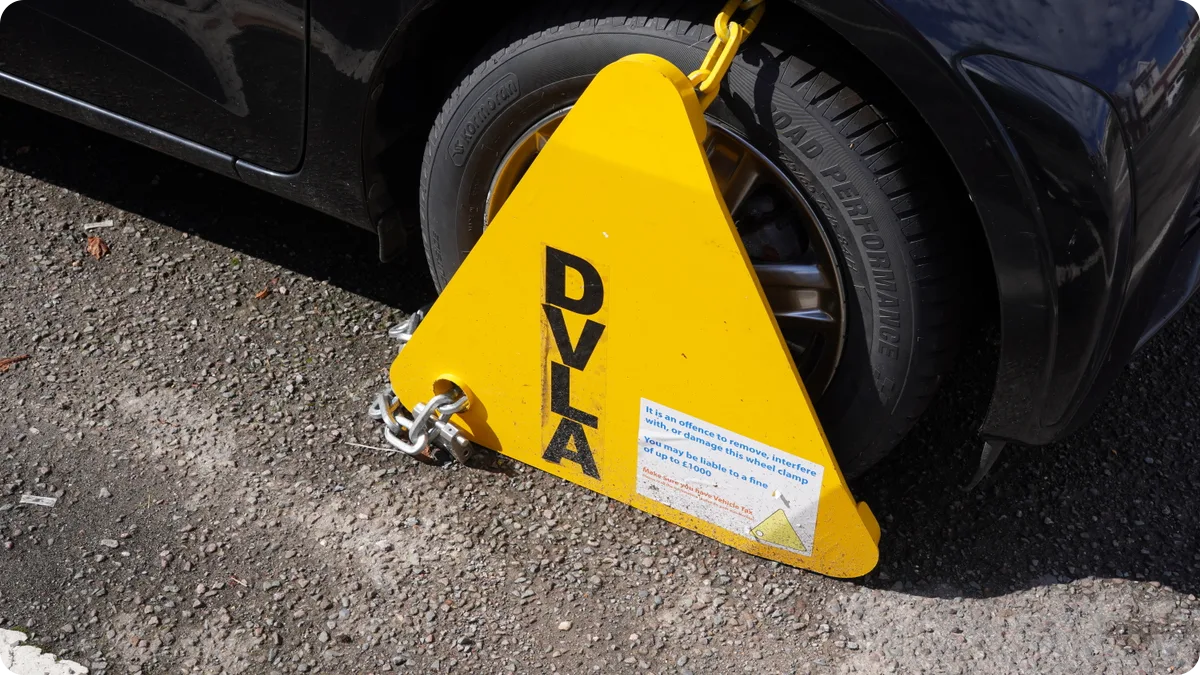
- Vehicle can be clamped, towed, and crushed
- Towing and storage costs added on top of any fine
How to tax a newly purchased car
You must tax the car before driving it. You'll need the 11-digit reference number from the V5C logbook. If the V5C hasn't been transferred yet, you can use the green "new keeper supplement" slip.
- 1Go to gov.uk/vehicle-tax and enter the reference number from the V5C
- 2Pay by debit card, credit card, or Direct Debit
- 3Tax takes effect immediately — you can drive away the same day
- 4The V5C should be transferred into your name within 2–4 weeks
How much does road tax cost?
For cars registered after April 2017, the standard rate is £195/year (2025/26). Cars whose list price exceeded £40,000 pay an additional £620/year for years 2–6. Electric cars pay road tax from April 2025 at the standard rate.
For cars registered before April 2017, the rate depends on CO₂ emissions — lower emissions, lower tax. Zero-emission cars registered before 2017 remain exempt.
BuyCarCheck shows the exact tax band and cost for each vehicle as part of the free check.
Found this useful?
A £4.99 check could save you thousands
Run a free basic check, or save money with a bundle — check three cars for just £11.99
Check before you buy
Finance · Write-off · Stolen · Keeper history