Buyer Guides
How To Buy a Car: Dealer vs Private, Scene by Scene
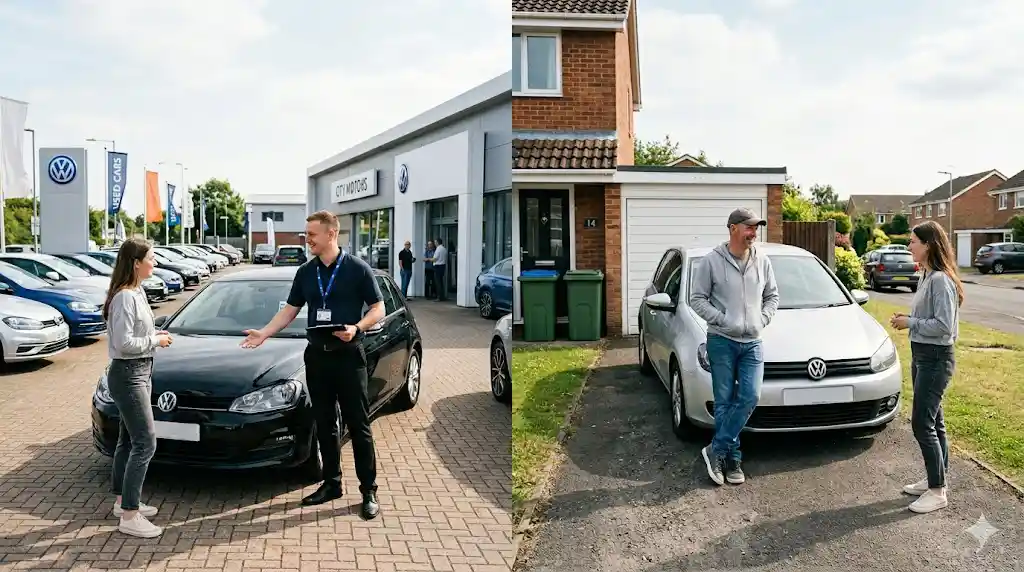
There are generally two ways to buy a used car in Britain, and they could not feel more different. One smells of free coffee and lanyards. The other smells of someone's garage and a slightly nervous bloke called Dave. Here is how both go, scene by scene — starting with the single sentence that instantly tells you which world you've wandered into.

Ricki Angel
Founder, BuyCarCheck · 19 June 2026 · 9 min read
Here's the playbook: you've found a car you like online. There's a photo of it parked at a jaunty angle, a price that's either suspiciously low or cheerfully optimistic, and a phone number. Your thumb is hovering over the call button.
Before you dial, know this: you can tell exactly who you're dealing with from a single sentence. You don't need to ask their VAT status. You don't need to read the small print. You just need to say six little words and listen very carefully to what comes back: “Hi, I'm calling about the car.”
Hidden Plate? Hidden Problem?
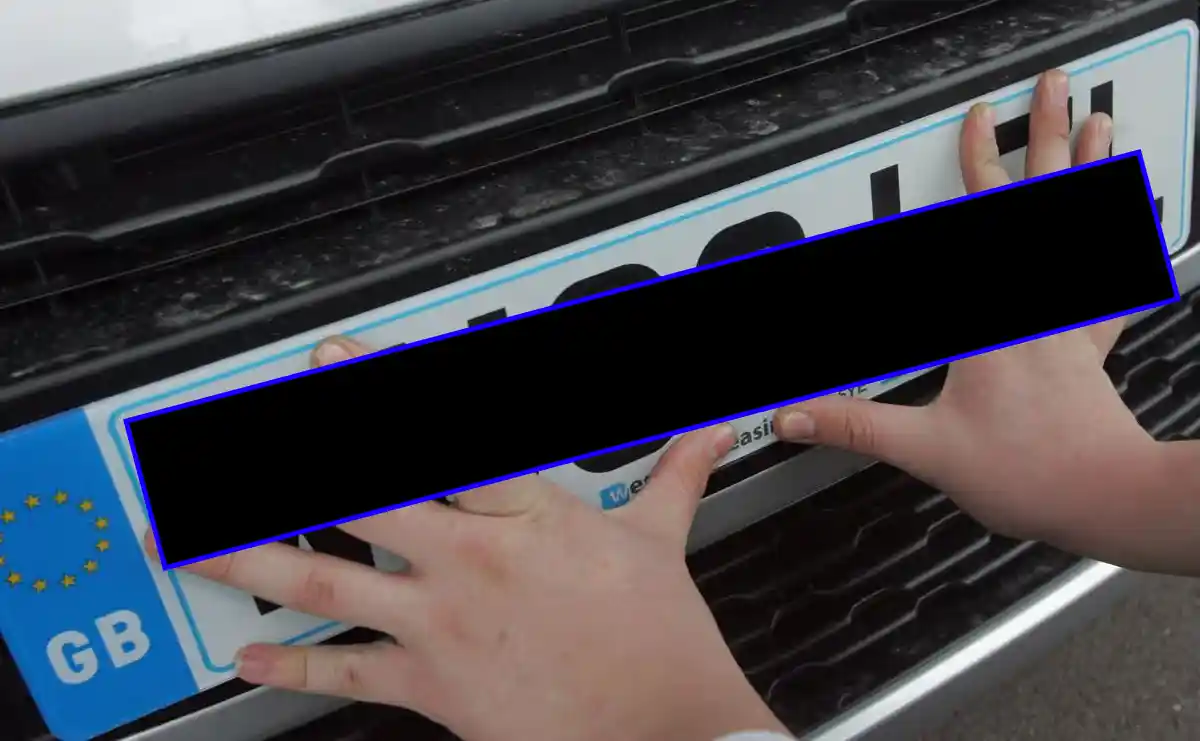
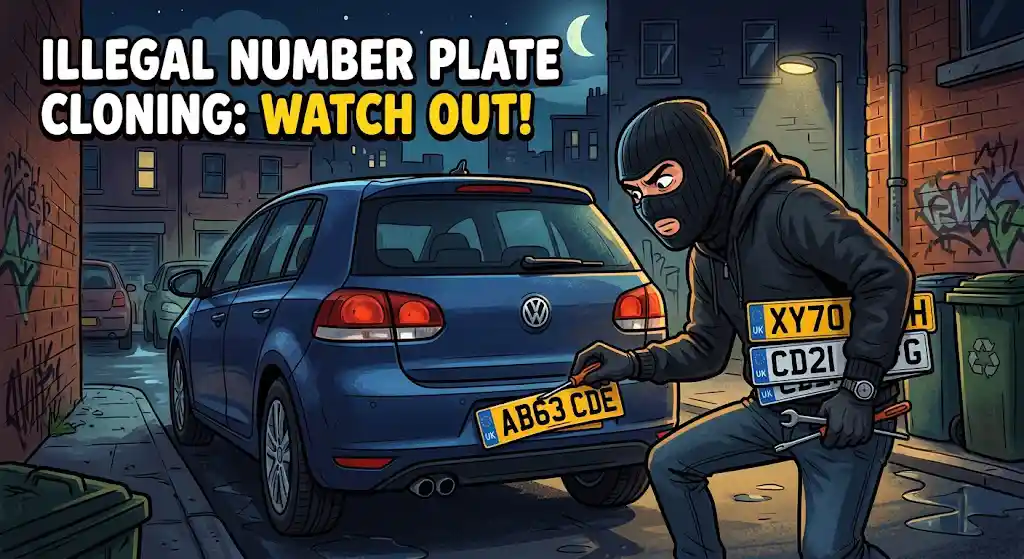
Just before you call — look closely at that jaunty photo. Is the number plate blurred, taped over, or cropped out? Sometimes it's perfectly innocent: plenty of sellers smudge the plate for privacy, or they're keeping a personalised registration and don't want it copied. But a hidden plate also conveniently stops you doing the one thing that protects you — running that registration before you waste a day travelling to see it.
On the call, tell them explicitly that you want to run the plate through a vehicle checking service like BuyCarCheck. That alone instantly marks you out as a genuine, serious buyer in their mind. A plate you can't read is a plate you can't check, and that can hide a chequered MOT history, a previous write-off, a mileage that doesn't add up, or a trader trying to stay anonymous. So before you commit to anything, ask for the registration up front. A genuine seller will hand it over without blinking. Anyone who gets cagey about a number that's on public display every time the car leaves the drive has just told you something.
The Call: six words that reveal everything
You ring the number. Someone answers. And you say, as casually as you can manage:
“Hi, I'm calling about the car.”
Now listen carefully. Everything you need to know is in the reply.
It's private
“Oh, the Golf! Yeah, still here. When d'you want to come see it?”
They know exactly which car you mean because they only have one. It's sitting on their drive. It's the only car in their entire life that a stranger would ever ring about.
It's a dealer
“Certainly — which car were you interested in, sir?”
Busted. The moment they ask which car, you know they have an operation churning out cars. Not a crime! But now you know who you're dealing with — and how to play it.
That's the whole trick. One car means private. A whole forecourt means trade. It even smokes out the sneaky ones: a “private” advert that answers “which car?” is a trader pretending to be a bloke called Dave to dodge your consumer rights. File that away — it matters later.
Some legitimate dealers and garages even flog Cat S and Cat N write-offs privately, to protect their forecourt's reputation and dodge having to give you the months of warranty a trade sale would owe you.
Why you actually care which one it is
It's not snobbery — the two routes come with genuinely different rules. Buy from a dealer and you're covered by the Consumer Rights Act: the car must be of satisfactory quality, fit for purpose, and as described. If it's a lemon, you have a right to reject it. Buy from a private seller and you get almost none of that. “Sold as seen” means the risk is yours the second you drive off.
That's the trade-off in one line: dealers cost more but owe you more; private sellers are cheaper but owe you nothing. So let's watch how the rest of the day plays out on each side.
The whole day, told twice
You're met at the door by someone in a fleece with the garage logo on it. There is coffee. There is a leather sofa. There is a man whose name badge says "Gaz" and whose handshake lasts slightly too long. He already knows your name because you filled in a form, and he'd love to "just grab a few details."
You pull up outside a normal house. Dave waves at you from behind a wheelie bin. The car is on the drive, half-washed, because he gave up on the back bumper. There is no coffee. There is a dog barking somewhere. Dave says "alright?" and that's the whole greeting.
Gaz walks you round the car forwards, like it's a game show prize. Every scratch has been polished into submission. "Full service history, mate, drives like new." You will not be allowed to feel sad about anything for at least ten minutes.
Dave points at a dent and says "yeah, the wife did that in Aldi car park, knock us a hundred quid off." Dave will tell you everything wrong with the car because Dave just wants it gone before the tax runs out. This is, weirdly, the more honest experience.
The test drive is a gentle five-minute loop with Gaz in the passenger seat narrating the heated seats. You will be steered away from the dual carriageway. You will not be allowed to floor it. The radio is on, mysteriously, to cover any noises.
Dave throws you the keys and says "go on then, I'll wait here." You now have a stranger's £6,000 car and total freedom. Floor it. Listen for the clonk on the roundabout. Turn the radio OFF and listen to the engine like a paranoid doctor.
Haggling with Gaz is theatre. He "goes to ask his manager," disappears for eleven minutes, and returns having heroically saved you £150 he was always going to give you. Then come the add-ons: paint protection, GAP insurance, a warranty on the warranty.
Haggling with Dave is just two humans being slightly awkward in a driveway. "Six grand?" "Five and a half?" "Five seven five?" Lots of chin rubbing… "Go on then." Done. No add-ons. The only upsell is a half-empty bottle of screenwash he found in the boot.
Paperwork is slick. Card machine, printed invoice, a folder with your name on it. You get consumer rights here — the car has to be "of satisfactory quality," and if it grenades itself in a fortnight, you have a legal leg to stand on. That's what the premium buys.
Paperwork is the V5C logbook and a receipt Dave writes on the back of an envelope. "Sold as seen." That phrase means YOU are the warranty now. No comeback if it dies on the motorway. This is why you check everything BEFORE the envelope comes out.
Do NOT always believe the spec list
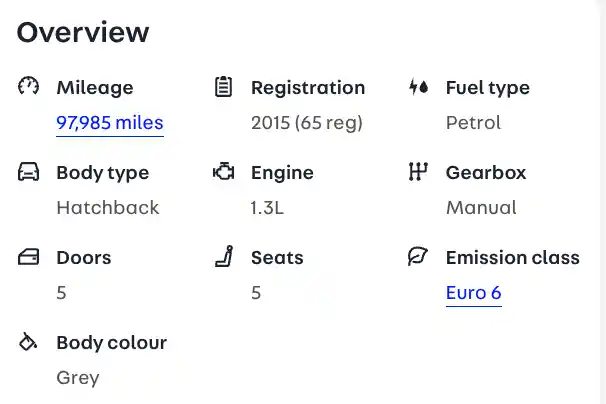
That glossy list of features in the advert? Treat it as a wish list, not a contract. Heated seats, Apple CarPlay, parking sensors, “panoramic roof” — they get sprinkled into listings to make you fall in love and drive across three counties to view it. The features are bait. They get you to commit before you've seen the car.
Then you arrive, you can't find the feature, you ask — and you get the magic phrase: “Oh, that's a printing mistake on the ad.” Funny how the printing mistake is always in the seller's favour, and never discovered until you've spent half a Saturday getting there.
This happened to me
My own car's advert proudly listed Apple CarPlay as a feature. Brilliant, I thought — that's the one thing I actually wanted. I got there, bought the car, and only later found out CarPlay wasn't included at all. It was a factory option that had never been activated — and to switch it on I had to pay £300 separately to the manufacturer. The advert wasn't a lie exactly; the hardware was there. But the feature I was promised cost me an extra three hundred quid I hadn't budgeted for.
The lesson: if a feature matters to you, sit in the car and make it work before you pay. Pair your phone. Press the button. Turn on the heated seats. If it doesn't do the thing the advert promised, that's your discount — or your cue to walk away.
How to haggle
Haggling makes most British people want to climb into a hedge. You don't need to be a shark — you just need a plan and the nerve to say a number out loud. Here's the whole game, step by step.
Know the real price before you arrive
Search the same make, model, year and mileage on the big listing sites and find the average. That figure, not the seller's asking price, is your anchor. Walking in informed is half the battle won.
Our £4.99 BuyCarCheck check includes a full ‘Vehicle Valuation’ estimated market value report, so you arrive already knowing what the car is really worth — from auction price all the way up to dealer forecourt, so you know exactly where the seller's asking price sits. The figures come straight from CAP HPI, the same industry-standard pricing data the trade itself uses to value cars, adjusted for the vehicle's exact mileage. Here's what that looks like:
Vehicle Valuation
This valuation does not account for write-offs or outstanding finance. If either is reported below, the “Trade Poor” valuation may be more accurate.
Private Sale
£21,045
avg condition
Dealer Price
£23,495
forecourt
* Based on 24,500 miles. Sourced from CAP HPI — for guidance purposes only, not a formal valuation.
Let them say a number first
Ask "what's the best you can do on it?" and then go quiet. Silence is uncomfortable, and the seller will usually fill it by dropping the price before you've even made an offer.
Open lower than your target
If you'd happily pay £5,500, open at £4,500. It gives you room to "compromise" up to the number you wanted all along, and lets the seller feel like they won something. Don't lowball them, just be firm and confident — stand there with your arms crossed. Remember, you're the person in power right now, with cash burning a hole in your pocket. They've likely had their time wasted by three tyre kickers already and just want to get rid of the thing.
Haggle with facts, not feelings
Every flaw is money. The corroded coil spring on the MOT, the missing service stamp, the tyres near the limit, those heavily lipped brake discs that turn out to cost £300 to replace — each one is a calm, specific reason for a calm, specific discount.
Talk one total price, not monthly payments
Dealers love steering you to "just £199 a month" because it hides the real cost in interest and add-ons. Always negotiate the full drive-away price first, finance second.
Use the silence and be ready to walk
Make your offer, then stop talking. If they say no, thank them politely and start heading for the door — more deals are agreed in the car park than at the desk. The person willing to leave is the person who gets the price.
The line that does the heavy lifting
“I'm ready to buy today at [your number] — cash in hand, no faffing about.” A seller who can see the money and the exit will move a long way to keep both. Say it, smile, and wait.
If a dealer asks for an “admin fee”, walk away
This one is personal, so let me tell you exactly how it went — because it's the single most useful thing in this whole article.
This happened to me
I'd spent days scrutinising a motor — the emotional investment alone was huge. Then I got the train all the way down from London to Southampton just to buy it. In the showroom they buttered me up beautifully: freshly brewed expensive coffee, donuts, jokes, laughter, everyone lovely and amiable.
Then came the upsells, one after another. “Paint polish and buffing kit, £79?” No thanks. “Extended three-month peace-of-mind warranty?” No thanks. “Alloy wheel care kit?” No thanks. “Interior leather cleaning kit?” No thanks. “One-day drive-away insurance?” No thanks.
And then, right at the very end — money about to change hands — they said it would be the vehicle price, plus a £99 admin fee, plus VAT.
I went livid. I told them this wasn't mentioned in a single piece of documentation anywhere — they'd lured me all the way down here and bumped up the price at the last second. The salesman just shrugged: “That's standard.”
So I said it plainly and firmly: “I appreciate your time, and I've spent a lot of emotional and physical energy getting here today, and we agreed a price. But if you insist on adding this £99 fee, I promise you — I will walk away. These cars are ten a penny. I've got the money right now, and I could buy a similar one from another dealer tomorrow. If you dare add a single penny to our agreed price, I am walking.”
The salesman went to the sales manager. They waived it there and then.
The lesson
In the heat of the moment, after all that time and emotion, it's so easy to just say “go on then” and cave to every extra cost. Don't. You came there to buy the car, full stop. Do not give in to admin fees, “delivery” fees, or any other invented charge. Stand by the price you agreed — and mean it when you say you'll walk.
The bit nobody finds whimsical
Here's where the fun stops, because here's where people lose real money. Whether it's Gaz's slick folder or Dave's envelope, none of it tells you the things that actually ruin lives: whether the car still has finance owing on it, whether it's been written off and patched up, whether it's flat-out stolen, or whether the “28,000 miles” on the dash was 80,000 last Tuesday.
Dealers should check this. Some don't. Private Dave almost certainly hasn't — and if there's finance on it, the finance company can legally take the car back, leaving you with an envelope receipt and a hole where your money used to be. “Sold as seen” will not save you.
The one move that works on both
Before the envelope, before the card machine, before you fall in love with the heated seats — run the registration through a check. The free MOT and tax data takes thirty seconds. A full history check (finance, write-off, stolen, mileage, keepers) is £4.99 and has saved buyers thousands. It works exactly the same whether you're facing Gaz or Dave, because the DVLA doesn't care who's holding the keys.
Private buyers: meet at the house, and check the V5C address
Buying privately? Insist the sale happens at the seller's home address — never a car park, a lay-by, or “outside the station, it's easier.” Then take the V5C logbook and check that the registered keeper's name and address printed on it match the person and the house you're standing in. A genuine owner selling their own car will tick both boxes without a second thought. If the names don't match, the address doesn't match, or they want to meet anywhere but home, walk away — that's exactly how stolen cars and “selling someone else's car” scams operate.
Detective tip: read between the MOT dates
The free MOT history is a goldmine, and not just for spotting clocked mileage. Take the mileage at one MOT, take the mileage at the one before it, and look at the dates either side. Subtract one from the other and you know exactly how many miles that car covered in that year. No seller can spin it. The numbers do the talking.
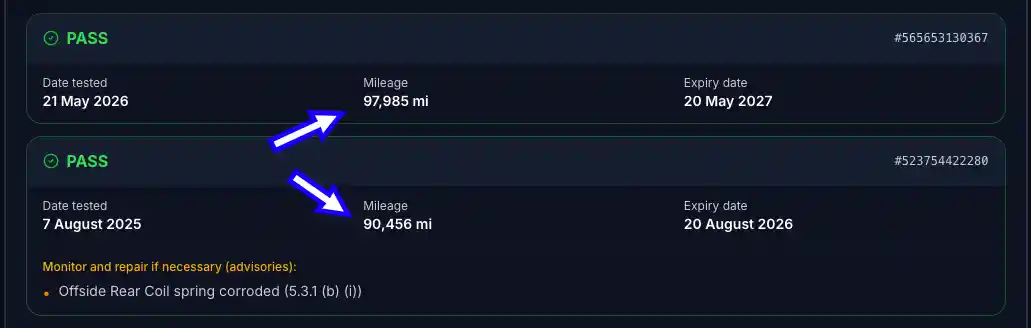
Here's why that matters. Say the gap between one year's MOT and the next works out at only around 500 miles. That is barely a fortnight's commute for most people. Someone covering 500 miles in a whole year almost certainly isn't a sales rep living on the motorway or running it as a business workhorse — they're a private keeper using it gently for domestic, social and pleasure. Trips to the shops, the odd Sunday run, and a lot of time sitting on the drive.
What low annual mileage usually tells you
A car that's done very few miles year on year has likely lived an easy, low-stress life: gentle use, fewer cold starts, less motorway pounding, less wear on the clutch, brakes and suspension. It's the kind of careful private ownership you actually want to find — and it's sitting there in black and white, for free, before you've even arranged a viewing.
The whole thing, on a napkin
Ring up and say "I'm calling about the car"
They name the car instantly → private. They ask "which one?" → dealer. A "private" ad that asks "which one?" is a trader in disguise — adjust your expectations.
A dealer costs more but covers more
You get Consumer Rights Act protection. Worth paying for if you want a comeback when things go wrong.
Private is cheaper with zero safety net
"Sold as seen" means you are the warranty. Inspect harder, drive longer, trust the wear over the words.
Be ready to walk away
The calmest person in the driveway gets the best price. Every time.
Check the reg before any money moves
Finance, write-off, stolen, and mileage fraud don't show up on the windscreen or the envelope. Check them yourself — on both routes.
That's it. Two worlds, one phone call to tell them apart, and one £4.99 check that works in both. Now go forth, sip the coffee, pat the dog, and buy the car like someone who knows exactly which kind of seller they're standing in front of.
Found this useful?
A £4.99 check could save you thousands
Run a free basic check, or save money with a bundle — check three cars for just £11.99
Check before you buy
Finance · Write-off · Stolen · Keeper history