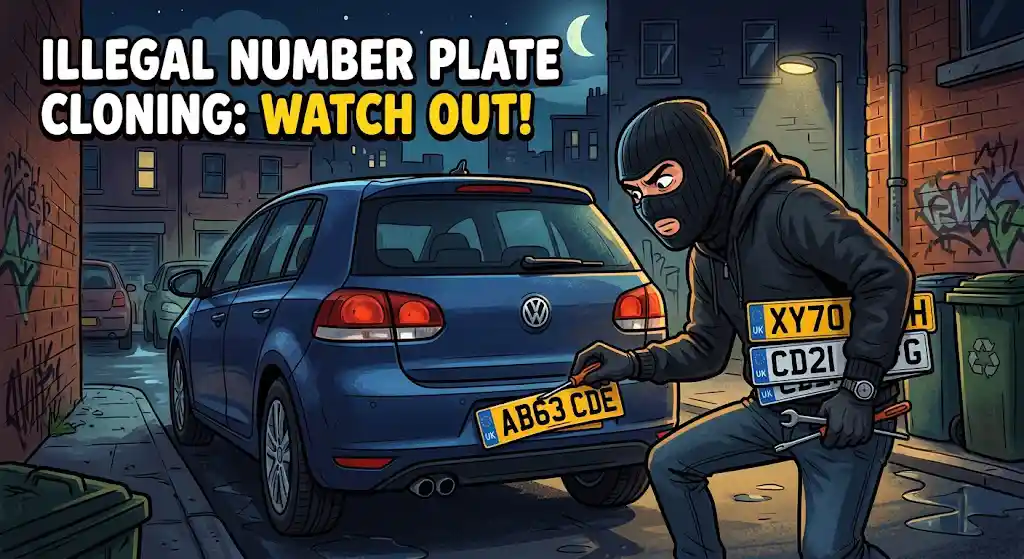
Buyer Guides
Cut and Shut Cars Still Exist in 2026 — Here's How They Slip Through
Take two written-off cars — one with a destroyed front, one with a crushed rear. Cut each in half, weld the good halves together, fill, sand, spray. You've built a cut and shut: one "car" from two corpses, wearing the identity of whichever half had the cleaner paperwork. It sounds like a 1990s urban legend. The tools just got better — and the marketplace moved to apps where nobody asks questions.

Lefteris (Leebo)
Vehicle Enthusiast, BuyCarCheck · 6 July 2026 · 7 min read
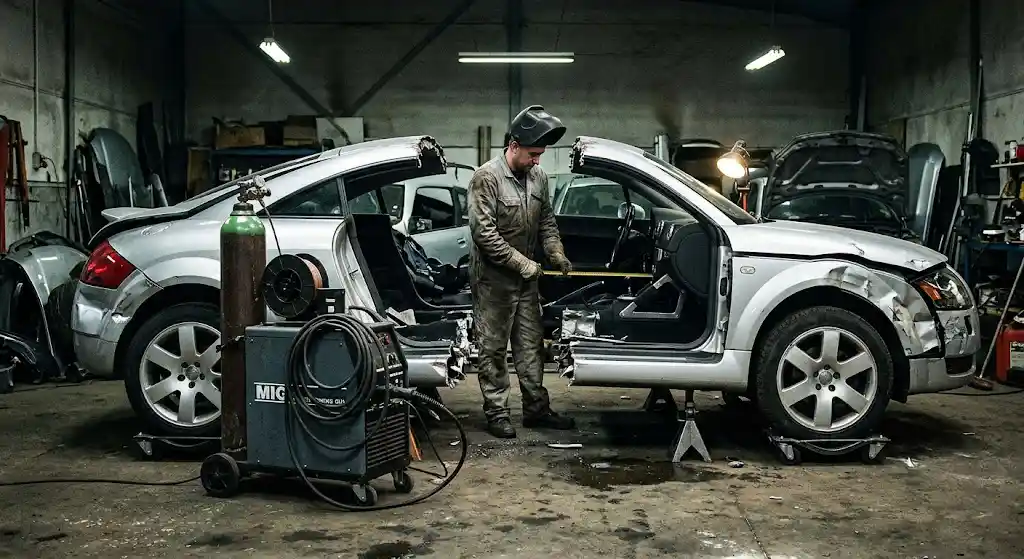
Take two written-off cars. One's had its front end destroyed in a crash. The other's had its rear crushed. Same model, same colour if you're lucky. Now cut each one in half, throw away the wrecked ends, and weld the two good halves together. Fill, sand, spray, polish. Congratulations — you've built a cut and shut: one “car” from two corpses, wearing the identity of whichever half had the cleaner paperwork.
If that sounds like a 1990s urban legend, I have bad news. The tools got better, the filler got smarter, and the marketplace moved to apps where nobody asks questions. Cut and shuts still surface in the UK — usually discovered only when a garage puts one on a ramp, or worse, when one folds in half in a collision it should have survived.
Why this isn't just fraud — it's lethal
A modern car body is a single engineered structure. Crumple zones, load paths, high-strength steel in exactly the right places — all of it designed to sacrifice itself in a precise sequence to keep the people inside alive. A weld seam through the middle of that structure, done in a lock-up with no jig and no factory spot-welding, breaks every one of those calculations.
In a crash, a cut and shut doesn't crumple. It snaps.
The join becomes the weakest point in the shell. Instead of absorbing the impact progressively, the car can tear along the seam — cabin and all. Airbag sensors calibrated for the original structure may fire late or not at all. This is why the practice isn't treated as a paperwork offence: selling one as roadworthy can put the seller in genuinely serious legal territory, and the buyer in hospital.
How a welded corpse gets a clean identity
The metalwork is only half the crime. The other half is paperwork. The builders start with the half that carries the best identity — ideally a car with no insurance write-off marker at all — and dress the finished creation in its number plates, its VIN, and its V5C. The donor half, and its entire crash history, simply evaporates.
That's the detail that should worry you: a cut and shut is designed to pass a casual history check, because the identity it wears may genuinely be clean. Which is why you check the metal and the data — each one catches what the other misses.
Spotting one in the flesh
You don't need a workshop. You need daylight, ten minutes, and the willingness to look where the seller doesn't point.
Match every VIN location
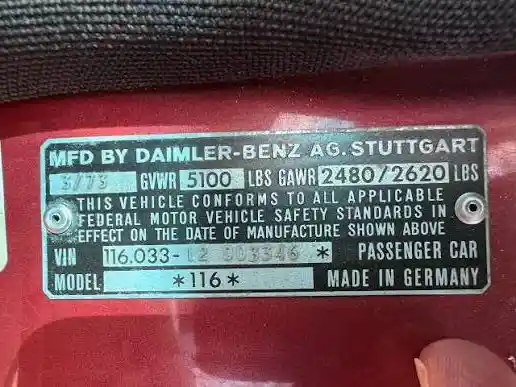
The VIN appears in several places: stamped into the chassis, on a plate at the base of the windscreen, on door pillar stickers, and printed into the V5C. On many cars it's also etched into the glass. They must all match, character for character. One missing sticker is life; two different VINs is a crime scene — walk away and report it.
Lift the carpets and the boot floor
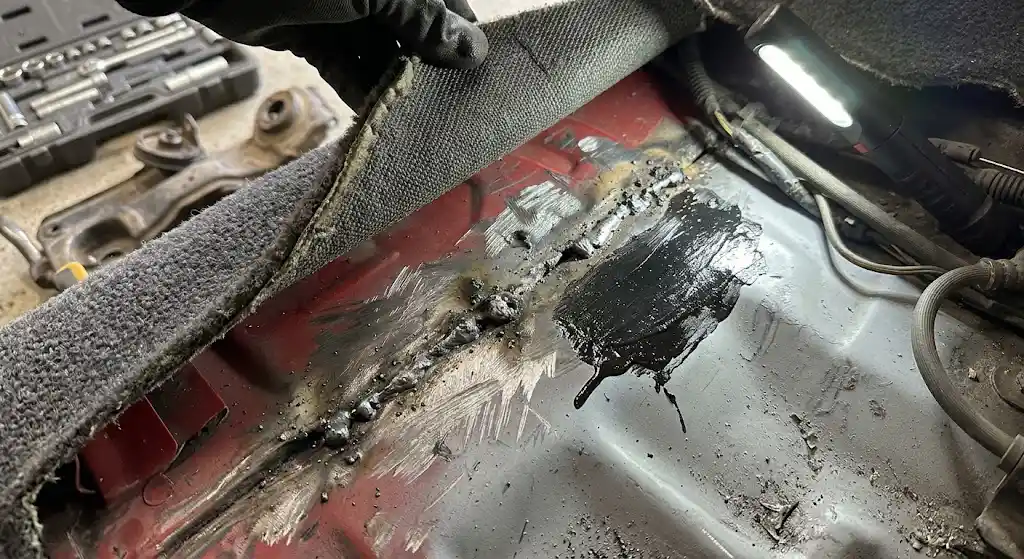
Factory floor pans are pressed from single sheets. Look for weld seams running across the floor, grinder marks, fresh underseal in a two-foot band, or sealant that looks hand-applied. Check under the rear seat bench too — nobody cleans up where they think you won't look.
Follow the roof lines and panel gaps
Sight down the length of the roof in low light. Ripples, a faint band of overspray on the rubber seals, or panel gaps that pinch mid-car are all wrong. Doors that need a slam on one side only tell the same story.
Check the paint mist and the trim
Open the doors and look at the sill edges and pillar trims: masking lines, paint on rubber grommets, or interior trim in two subtly different shades of "the same" colour mean two different cars donated parts.
Mismatched wear is a confession
A car is one object that ages together. Front seats worn shiny with a pristine rear bench, tyres from two eras, headlights yellowed on one end and crystal on the other — mismatched ageing front-to-rear deserves an explanation better than a shrug.
When in doubt
A pre-purchase inspection on a ramp costs less than a tank of fuel and takes an hour. Any independent garage will spot a non-factory seam in about ninety seconds with the car in the air. If a seller won't let the car go on a ramp, that's not a scheduling problem — that's your answer.
The data trail they can't weld shut
Remember: at least one half of every cut and shut died violently, and violent deaths leave records. Even when the finished car wears the cleaner identity, the seams show in the data more often than the builders would like:
A write-off marker on the plate
If the identity car was itself a recorded Cat B, Cat S or Cat N, it shows instantly on a full history check. A Cat B ("break") shell legally must never return to the road — a Cat B marker on a driveable car is a five-alarm emergency.
MOT history that doesn't add up
Long silent gaps, a car tested in one region for years that suddenly reappears across the country, or mileage that steps backwards — resurrection jobs leave gaps where a real car has heartbeats.
Keeper churn
Multiple keeper changes in quick succession right before the sale is the classic laundering pattern: each change washes the story a little cleaner.
Thirty seconds before you travel
Run the plate through BuyCarCheck before you even arrange the viewing. The free check surfaces the MOT timeline and its silences; the £4.99 full check adds the write-off record, outstanding finance, stolen markers and keeper history — the exact four places a stitched-together car's past leaks through. If the data says Cat B, or the story doesn't match the metal, you've just been saved from the most dangerous purchase on the used market.
The whole thing, on a napkin
A cut and shut is two write-offs wearing one identity
Built to pass a glance, priced to hurry you, and structurally compromised where you can't see.
VINs are the tripwire
Every VIN location must match each other and the V5C. Two different numbers means walk away and report it.
Look where nobody polishes
Under carpets, under the boot floor, along roof lines, on rubber seals. Factory cars don't have seams.
Check the data before the drive
Write-off markers, MOT gaps and keeper churn betray resurrection jobs. £4.99 against a car that snaps in half is not a hard sum.
Most used cars are honest. But the dishonest ones cluster exactly where the deals look too good — and a cut and shut is always, always priced to make you stop thinking. Slow down, lift the carpet, check the plate. The ten minutes costs nothing. The alternative can cost everything.
Found this useful?
A £4.99 check could save you thousands
Run a free basic check, or save money with a bundle — check three cars for just £11.99
Check before you buy
Finance · Write-off · Stolen · Keeper history